




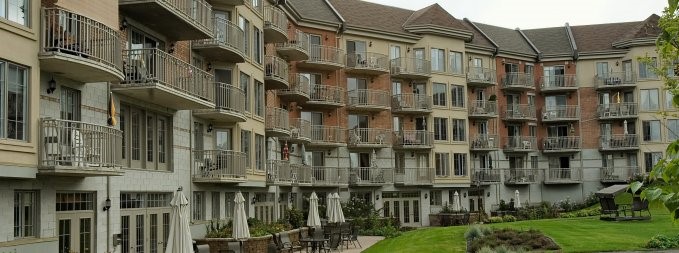
Stop Exterior Problems Before They Drain Your Budget
If you manage multifamily properties, you know how fast small siding issues can turn into costly repairs. Tenant complaints, water damage, HOA code violations, and rising maintenance costs all threaten your building’s value and reputation.
Pacific Exteriors NW provides proactive, long-lasting siding solutions that eliminate the guesswork and stress of large-scale exterior renovations.
Why Property Managers and HOA Boards Trust Us
- Experience that Delivers: Over 20 years specializing in multifamily, apartment, and condo siding projects throughout the Pacific Northwest.
- Turnkey Project Management: From initial inspection and permitting to final walkthrough, we handle every step.
- Compliance Confidence: We ensure full HOA and municipal code compliance, protecting you from costly delays.
- Proven Materials: Certified installers for James Hardie®, LP SmartSide®, and other premium siding systems built for PNW weather.
Siding for Multifamily and Commercial Properties
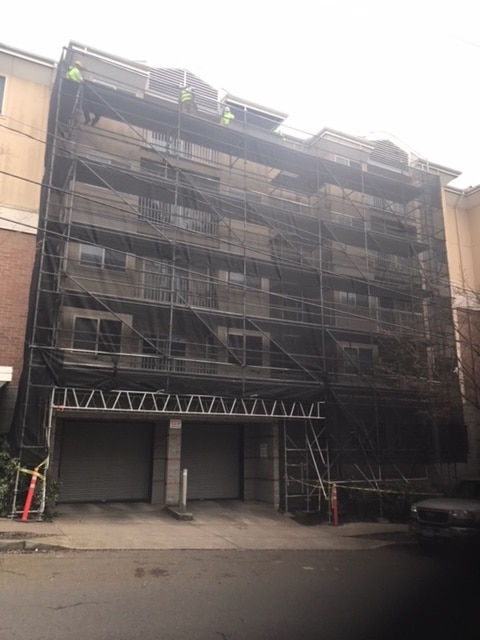 As a James HardiePlank siding installer (Hardie siding) for the Pacific Northwest and based in Portland, we specialize in multifamily apartment siding repair, condominium siding and waterproofing repair, and townhomes. We have the solution to all your siding problems. Many people and associations call it James Hardie, Plank Hardie Siding, or Hardie Board, just for clarification.
Siding Repair and Replacement Services:
- Home Siding Repair and Replacement
- Multifamily Siding Repair and Replacement
- Condominiums Siding Repair and Replacement
- Apartment Siding Repair and Replacement
- Hotel Siding Repair and Replacement
- Commercial Building Siding Repair and Replacement
- Siding Removal and Replacement
- New Siding Installation
- Damaged Siding Repair Experts
- Dryrot Siding Repair Experts
- Siding Problems Experts
Types of Siding we offer for the Portland, Vancouver, surrounding areas:
- Hardie Plank Siding
- Prepainted Hardie Plank Siding
- ColorPlus James HardiePlank FiberCement Siding
- James Hardie Plank Artisan Siding
- James Hardie Reveal Siding
- Cedar Siding
- T1-11 Siding
- Wood Siding
- Stone and Brick Siding
- Fiberboard siding
- Fiber cement siding
Preventative Maintenance Packages for Multifamily and Commercial
Pacific Exteriors NW also offers different preventative maintenance packages for long-term protection of the building’s envelope, saving property managers or owners thousands of dollars in repairs. Pacific Exteriors NW integrates LEED certification with advances in green building materials, eco-friendly engineering, and production management with our multifamily and commercial projects. Pacific Exteriors NW staff partners with the region’s foremost experts on building codes, waterproofing, and flashing methods, with architectural design for inspection compliance and sustainability.
Financing Overview for Capitol, Multifamily and Commercial Projects:
(Typically for HOA Condominium/Townhome Multifamily Owners)
Association Loan Overview
- The HOA is a non-profit and can borrow on behalf of the Association.
- Governing Documents must allow the Association to borrow and pledge assessments.
- All voting and approval requirements included in the governing documents must be met.
- Collateral is the Association’s ability and authority to assess and collect from the owners; all current and future assessments (income) are assigned as security.
Association Loan Criteria
- Adhere to State Statutes for remediation construction
- Scope of Repair should be thorough; if repairs aren’t being made, funds must be placed in a reserve account to ensure the property will remain stable during the life of the loan
Loan Concept: There are multiple loan concepts for Associations. Outlined below is a typical association loan scenario:
- Construction Line of Credit
- Term Loan
Option 1 Example: Construction Line of Credit, fixed-rate, converts to a term loan at project completion
| Line of Credit | To Be Determined- Based on Construction Budget |
| Term | Up to 12 months (renewable after that). |
| Repayment | Interest only, monthly payments with one final payment of all accrued interest and principal due at maturity, to be converted to Facility 2 below. Note: There is no prepayment restriction on the construction line of credit, and it may be converted to the term loan below at any time before expiry. |
| Rate | Typically 4.25 – 4.75% – Fixed Rate during Construction |
Option 2 Example: Term loan – Fully Amortized – 10 and 15-year terms available
| Loan Amount | The outstanding balance of Facility 1 above upon conversion |
| Term | 10-15 years fully amortizing |
| Repayment | Per month (principal & interest) for 120 – 180 months with an interest rate reset every 60-months |
| Rate | The current Rate determines the month the line of credit converts to a term loan. |
Loan Repayment
- Owners are not required to “Opt-in” to loan
- There are no Pre-payment penalties for owners or Associations to pay off early
- Association loans often do not go full-term
No Personal Guaranty
- No liens – buy and sell
- No individual credit scoring
- No personal assets
Payment Options for Owners
- Pay Monthly
- Pay a lump sum and avoid interest charges
- Pay monthly and pay off the remaining balance at a later date
- Utilize home equity loans, savings, 401K, etc.
Sometimes, homeowner’s associations need to borrow money for repairs or improvements of the common areas of their community. This process can be difficult and confusing. This article aims to untangle the confusion surrounding this valuable tool.
What is an HOA Loan?
Associations can require loans for a variety of reasons. The most common of those is for repairs. Oftentimes, associations have not set aside monies for repairs. HOA loans can also be used for litigation purposes. Using legal services can be very expensive, and it is not uncommon for associations to pursue litigation against developers. These litigations can take extended periods, and it is sometimes necessary for the association to have additional funds to last them through the litigation process. HOA or condo association loans are issued to the association as a non-profit corporation, not as a consumer loan.
The association’s assessment ability usually secures this loan or line of credit. Banks will also reserve the right to assess the association should they become behind on their payments. However, they typically do not put liens on property or tangible assets. HOA associations pay monthly fees, and most banks require that if an association has a loan with them, all of their banking has to go through them. This is typically how HOA loans work; however, specifics vary from bank to bank. HOA loans vary from 3 to 10 years and depend upon the scope of repairs done and the amount of money borrowed.
Not all banks or institutions will lend to HOA associations. HOA loans are usually made by local banks specializing in HOA loans. Banks also look for particular criteria to qualify an association for a loan. Banks prefer associations with low delinquency rates and low ratios of renters to owners. Associations with these qualifications are typically more secure. Loans that are less than 20% of the total value of the units are also preferred. Any higher than this, and the risk becomes too great for the bank. Most banks also require a reserve study done by a professional performed or updated in the last two years. Quite a few things can prevent an HOA loan from going smoothly.
HOA associations’ most common error is that they do not get the bank involved soon enough. Banks have particular criteria that they require, and understanding the criteria of the bank early on will be more beneficial. This advanced notice will allow you to prepare better to meet their criteria. Securing the funds from the bank before you enter into a contract is also essential. If an association has an outdated or poorly performed reserve study, it may not be able to get approved. Reserve studies provide the bank with very accurate data about the valuable life of the common elements of a community, as well as what future repairs are on the horizon. Without a clear idea of where an association stands, a bank may not approve.
Defective Siding Alert-(Class Action Lawsuit)
CertainTeed Fiber-Cement Settlement
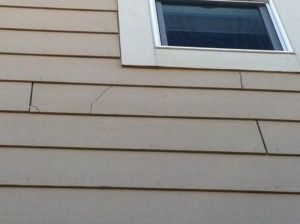 Pacific Exteriors NW has replaced and repaired more defective CertainTeed fiber cement siding since we are building experts. We specialize in replacing defective siding systems like LP siding, Synthetic Stucco siding, EIFS siding, DryVit siding, Omni Wood, Masonite, Weyerhaeuser, and Cladwood, among others, and now Portland CertainTeed fiber cement siding, which was involved in a class action lawsuit recently. Here are some of the details of the settlement and lawsuit. “VALLEY FORGE, Pa., Nov. 4, 2013 /PRNewswire/ — CertainTeed Corporation and Counsel for the Plaintiffs in In re: CertainTeed Fiber Cement Siding Litigation, MDL Docket No. 2270 (E.D. Pa), announced today that they have agreed to settle various class actions relating to fiber cement siding manufactured by CertainTeed Corporation and installed on or before September 30, 2013. Plaintiffs, who own properties with the siding, allege that the siding was defective. CertainTeed believes that its fiber cement siding has performed well over many years but has agreed to the settlement to avoid the expense, inconvenience, and distraction of further protracted litigation and fully resolve this matter. The fiber cement siding included in the settlement is CertainTeed
 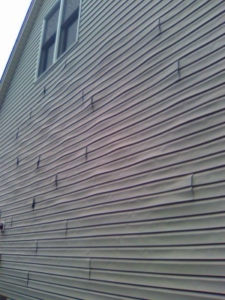 Weatherboards™ Fiber Cement Siding, Lap Siding, Vertical Siding, Shapes, Soffit, Porch Ceiling, and 7/16″ Trim installed before September 30, 2013. CertainTeed’s vinyl siding and polymer shake products are not involved in this litigation. CertainTeed will pay $103.9 million to fund the settlement, which includes attorneys’ fees and costs. The settlement agreement provides a more substantial remedy than is available to property owners under CertainTeed’s limited warranty. The availability of the remedy under the settlement depends upon several factors such as (1) the extent of the Qualifying Damage; (2) the proportion of the wall with Qualifying Damage; (3) the size of the wall; (4) the length of time the siding has been installed; and (5) whether the Qualifying Damage was caused by a third party or as a result of improper installation or storage. The settlement agreement must be approved by a judge — in this case, by United States District Court Judge Thomas P. O’Neill — after a hearing, which we expect to take place on February 19, 2014, in Philadelphia, Pennsylvania. People who own or owned buildings with CertainTeed Fiber Cement Siding and believe they may qualify for a remedy under this settlement can obtain additional information about the settlement by calling 1 (855) 332-3413, or by writing to CertainTeed Claims Administrator, PO Box 2007, Chanhassen, MN 55317-2007.” (SOURCE Analytics Consulting, LLC, Claims Administrator) Pacific Exteriors NW can also help recommend attorneys and building consultants with the CertainTeed lawsuit for Portland, OR, and Vancouver, WA owners. Here are some signs to look for: Swelling boards, huge gaps or spacing in the joints/seams, shrinking boards, corners of siding boards cracking, discoloration chalking/fly dust, dry-rot/mushrooms to boards or on trim boards.