




Cedar Siding for Pacific Northwest Homes
Western Red Cedar has been part of this region’s building tradition for as long as there’s been building here. It was revered by the original inhabitants of the Pacific Northwest as the “tree of life,” and its reputation as a siding material has held up for a genuine reason: real cedar brings a warmth and natural character that manufactured products can approximate but never quite replicate. Pacific Exteriors NW has installed real cedar siding throughout Oregon and Washington since 1994.
Why Grade Matters
We recommend only Grade A, first-rate milled cedar, whether clear or knotty grain, because the difference in quality and durability between grades is significant and shows up over time, not on day one. Cedar’s natural resistance to moisture, decay, and insect damage is real, but it depends on starting with quality material. Lower-grade cedar undermines that natural performance from the start, regardless of how well it’s installed afterward.
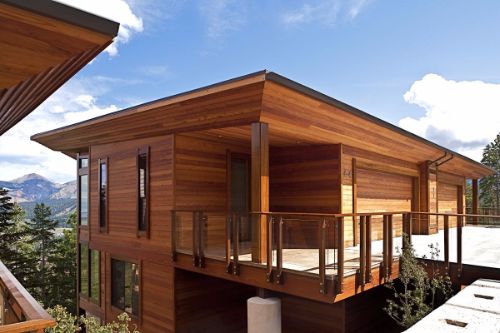
Where Cedar’s Performance Actually Comes From
Cedar’s rich grain and warm tones, ranging from light amber to honey brown, get most of the attention, but the material also delivers real functional benefits: excellent sound absorption, natural thermal performance that helps homes stay cooler in summer and warmer in winter, and enough dimensional stability to accept and hold a wide range of finishes. None of that performance is guaranteed by the material alone, though. Proper waterproofing, rain screen installation, correct flashing integration, and the right nailing schedule are what determine whether cedar siding performs the way it’s capable of performing in this climate, or develops moisture problems within a few years.
Maintenance Expectations, Honestly
Cedar asks more of a homeowner than a manufactured alternative like James Hardie fiber cement. It needs periodic refinishing to maintain its appearance and protective qualities, and we’re direct about that commitment before you choose it. For homeowners who want the look without the upkeep, Hardie is worth comparing. For homeowners who specifically want the real thing, properly installed and maintained cedar rewards that choice with a look no composite material fully matches.
Common Questions About Real Cedar Siding
How often does cedar siding need to be refinished?
It depends on the finish type and your home’s sun and weather exposure, but most cedar siding benefits from refinishing every few years to maintain both appearance and protection. We can give you a realistic maintenance schedule specific to your home’s orientation and finish.
Is cedar siding a good fit for a wet climate like ours?
Yes, when it’s properly detailed. Cedar’s natural resistance to decay is real, but it depends entirely on correct rain screen installation, flashing, and back-priming. Cedar installed without those details is exactly the kind of siding that develops hidden moisture problems in this climate.
What’s the difference between clear and knotty grade cedar?
Clear grade has a more uniform, refined appearance with minimal knots, while knotty grade carries more visible natural character. Both perform well when properly milled and installed; the choice is largely aesthetic and tied to your home’s architectural style.
Are you licensed in Oregon and Washington?
Yes. Oregon Contractor License #215897 and Washington Contractor License #PACIFBS831MK, both active and current, verifiable directly with either state’s licensing board.
Talk to Us About Cedar Siding
If you’re drawn to the look of natural cedar for your home, Pacific Exteriors NW would welcome the chance to talk through what proper installation and long-term care actually look like. We often pair cedar with stone or brick accents for added texture, and where existing moisture damage is found behind old cedar siding, our water damage repair team addresses it as part of the same project.
Phone: 360-907-1128
Email: info@pacificexteriorsnw.com
Website: pacificexteriorsnw.com
Licensed in Oregon (#215897) and Washington (#PACIFBS831MK). Serving the greater Portland and Seattle metro areas.