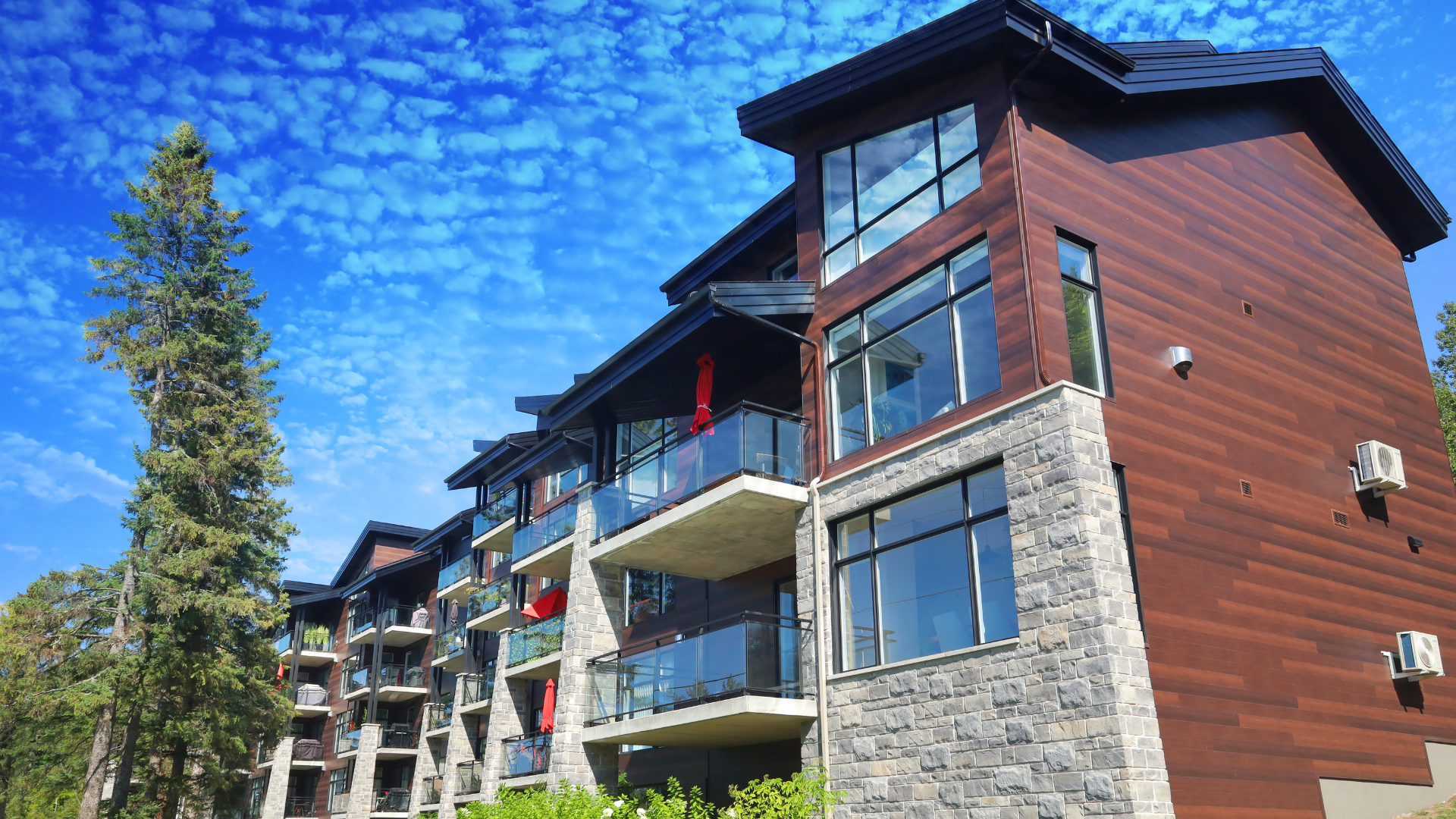

Commercial siding damage does not automatically mean the entire exterior must be replaced. Some buildings need a targeted repair. Others have widespread moisture intrusion, aging materials, or repeated failures that make replacement the more responsible investment. The right decision starts with the condition behind the cladding, not just what is visible from the parking lot.
This guide explains five factors property owners and managers can use to compare commercial siding repair and replacement. It is intended for apartment, condominium, HOA, hotel, mixed-use, and commercial properties in the Pacific Northwest, where rain exposure and concealed water damage can quickly change the scope of an exterior project.
Commercial Siding Repair or Replacement: The Short Answer
Repair is usually appropriate when damage is isolated, the surrounding wall assembly is performing correctly, matching materials are available, and the remaining siding has useful service life. Replacement is usually the better choice when failures are widespread, water has reached sheathing or framing, the siding is near the end of its life, or repeated repairs are no longer controlling the problem.
A visual walk-through can identify obvious symptoms, but the final decision may require moisture testing, selective openings, and a review of transitions around windows, decks, roofs, penetrations, and changes in wall materials.
1. Determine Whether the Damage Is Localized or Widespread
The first question is not simply how much siding looks damaged. It is whether the failure is limited to one area or repeated across the building.
A localized repair may make sense when damage is tied to a specific event or detail, such as an impact, a failed downspout, one poorly flashed penetration, or a small section affected by a leaking window. The surrounding siding, weather barrier, flashing, and substrate should still be in serviceable condition.
Replacement becomes more likely when cracking, swelling, loose panels, failed joints, staining, or deterioration appears on several elevations. Repeated symptoms often indicate that the problem is not one damaged board. It may involve installation practices, missing clearances, incompatible materials, or a wall assembly that cannot drain and dry as intended.
2. Investigate Moisture Behind the Siding
Surface appearance does not reveal the full condition of a commercial wall. Water can enter behind siding at windows, doors, decks, roof-to-wall intersections, utility penetrations, and failed flashing. The exterior may show only minor staining while sheathing or framing is deteriorating behind it.
Before bids are compared, establish whether the scope includes only cladding or also weather-barrier, flashing, sheathing, insulation, or structural repairs. Selective exploratory openings can help determine the depth and boundaries of concealed damage.
If the substrate is sound and the water-entry point can be corrected locally, repair may be practical. If testing finds recurring moisture across several locations, a larger replacement scope may be needed so the drainage plane and critical transitions can be rebuilt consistently.
3. Compare the Siding’s Age With Its Remaining Service Life
A repair should extend the useful life of the wall, not postpone an unavoidable replacement for a short period. Consider the age of the siding, previous repairs, coating condition, fastener performance, joint movement, and whether the original installation followed the manufacturer’s requirements.
Repairing a relatively young system with one correctable failure can protect the owner’s investment. Repairing an aging system that is failing in multiple places may create a cycle of scaffolding, resident notices, access costs, and emergency work without addressing the larger risk.
Material availability also matters. If the existing profile, thickness, texture, or color is discontinued, a small patch can become visually obvious or difficult to integrate. Owners should decide whether appearance standards allow a limited mismatch or whether an elevation-based replacement will produce a better result.
4. Add Up Repeated Repair and Access Costs
The least expensive immediate proposal is not always the lowest-cost plan. Commercial exterior work includes more than siding materials. Mobilization, lifts or scaffolding, protection, permits, traffic control, tenant communication, landscaping protection, and reopening finished areas can represent a substantial part of the project.
When the same elevations need repairs every few years, owners repeatedly pay those access and coordination costs. A broader replacement project may reduce recurring mobilization and create one coordinated opportunity to correct flashing, waterproofing, trim, sealants, and damaged substrate.
Ask bidders to separate base scope, expected repair allowances, access costs, and unit prices for concealed damage. Comparable proposals make it easier to evaluate a limited repair against phased or full replacement.
5. Define the Performance Goal for the Property
The correct scope depends on what the owner needs the building to accomplish. A short-term stabilization plan for a property scheduled for redevelopment is different from a long-term capital project for an occupied apartment community or hotel.
Replacement may create an opportunity to improve drainage, air sealing, insulation continuity, fire performance, durability, and transitions between siding, windows, roofing, decks, and waterproofing. Those improvements should be identified before materials are selected so the project solves the wall’s actual problems.
Repair may still be the right answer when the assembly is fundamentally sound and the goal is to correct one documented defect. The important point is to define the performance target first, then choose a scope that can meet it.
When Commercial Siding Repair Is Usually Appropriate
- Damage is limited to a small, clearly defined area.
- The source of water entry has been found and can be corrected.
- Sheathing and framing remain sound outside the repair area.
- The existing siding still has meaningful service life.
- Compatible replacement material and flashing details are available.
- The repair can be inspected before the wall is closed.
When Commercial Siding Replacement Is Usually the Better Plan
- Failures occur on multiple elevations or around repeated details.
- Moisture testing finds concealed damage beyond one isolated area.
- The siding is near the end of its expected life.
- Past repairs have not stopped leaks or deterioration.
- Existing installation details prevent reliable local repairs.
- The owner wants coordinated performance upgrades across the exterior.
For a separate look at the value, material, and installation considerations involved in a larger project, read Commercial Siding Replacement Benefits and Project Steps.
Build the Scope Before Requesting Final Bids
Contractors cannot price the same job when each proposal assumes a different amount of investigation, demolition, substrate repair, flashing, trim, coating, and access. A written scope helps owners compare the same work and identify exclusions before construction begins.
The scope should document known conditions, investigation findings, repair boundaries, material requirements, flashing details, owner responsibilities, resident or tenant access, protection, inspection hold points, allowances, unit prices, and closeout documents. For phased projects, it should also explain how temporary transitions will remain watertight between phases.
Plan Around Occupants and Property Operations
Commercial and multifamily siding projects often happen while the property remains occupied. The plan may need to address work hours, noise, parking, balconies, window access, pedestrian routes, deliveries, dust, pets, tenant notices, and emergency contacts.
Early coordination can reduce disruption and prevent access problems from delaying the crew. Owners should identify who has authority to approve concealed-damage changes and how residents, tenants, managers, and the contractor will receive updates.
Get a Condition-Based Commercial Siding Recommendation
Pacific Exteriors NW provides direct commercial and multifamily exterior repair and replacement services in Oregon and Southwest Washington. We can help evaluate visible failures, coordinate investigation where needed, define a practical construction scope, and plan the work around an occupied property.
Explore our Commercial and Multifamily Exterior Services or request an exterior project consultation to discuss your building, known damage, location, and timing.