




Commercial Forensic Building Envelope Consulting
Commercial & Multifamily Building Envelope Inspections
Hidden moisture and exterior-envelope failures can affect multiple units, common areas, occupied spaces, and long-term capital plans before the damage becomes obvious. A stain inside one apartment may originate at a window several feet away. A recurring hotel leak may involve the connection between roofing, wall cladding, and a balcony rather than the surface where water appears. When several repairs have failed, the property needs a broader investigation instead of another guess.
Pacific Exteriors NW provides commercial forensic building-envelope consulting throughout Oregon and Washington. We help property owners, portfolio and community managers, condominium and HOA boards, hotel operators, consultants, attorneys, and insurers investigate water intrusion, concealed damage, construction defects, and exterior-system failures.
Our goal is practical: identify the most likely entry paths, document what can be confirmed, define the limits of the investigation, and give the project team useful information for repair planning, budgeting, claims, due diligence, or legal review. When the property already knows that repair is required, our related commercial construction defect repair service connects the findings to a buildable scope.
Apartments | Condominiums | HOA Communities | Hotels | Senior Living | Mixed-Use Buildings | Commercial Properties | Building Envelope Inspections | Water Intrusion Investigations
What Commercial Forensic Envelope Consulting Involves
A forensic building-envelope investigation brings together property history, visible conditions, weather exposure, assembly details, testing, and field experience. No single tool can explain every leak. We select methods based on the building, the symptoms, access, occupancy, and the decisions the findings must support.
Document and history review
Available plans, prior reports, repair records, warranties, photographs, maintenance history, resident or tenant complaints, and weather patterns can reveal when a problem began and whether it repeats by elevation, assembly, unit type, or construction phase.
Visual exterior and interior review
We look for staining, failed sealants, open joints, improper clearances, damaged cladding, cracking, poorly integrated penetrations, drainage problems, roof-to-wall transitions, window and door conditions, deck or balcony connections, and interior evidence that may correspond with exterior entry points.
Infrared thermal imaging
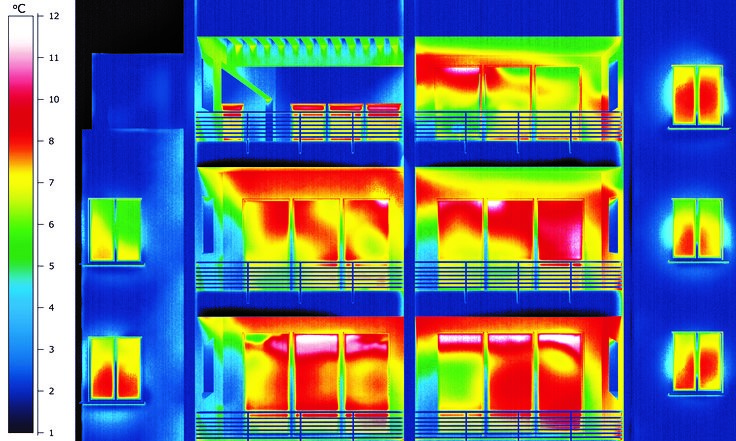
Our team uses infrared thermal imaging performed by staff trained to Level 2 thermography standards. A thermal camera does not see water through a wall. It records surface-temperature patterns that can help identify areas requiring closer evaluation. Weather, sunlight, HVAC operation, materials, and interior conditions can all affect the image, which is why thermal findings must be interpreted alongside other evidence.
Moisture testing and mapping
Appropriate moisture meters and comparative readings can help map the extent of elevated moisture and distinguish an isolated symptom from a repeating pattern. Readings are documented with their locations and the conditions present at the time of testing.
Targeted openings or selective testing
When surface observations cannot confirm what is happening behind the cladding, a carefully selected opening may reveal flashing, weather-barrier, sheathing, framing, insulation, or concealed moisture conditions. Openings are planned around the investigation question, safety, access, weather protection, and the need to repair the area afterward.
Photographic and written documentation
Findings are organized so owners and project teams can connect photographs, testing locations, observed conditions, likely failure paths, limitations, and recommended next steps. Clear documentation is especially important when several buildings, units, decision-makers, or professional disciplines are involved.
Who Uses Commercial Building-Envelope Consulting?
Our commercial forensic work supports apartment owners, capital investors, property and portfolio managers, condominium and HOA boards, hotel operators, senior living facilities, mixed-use properties, commercial owners, consultants, attorneys, and insurers. The investigation can be useful during an active leak, before a major exterior renovation, after repeated repairs have failed, during due diligence, when several units report similar damage, or when documentation is needed for a warranty, insurance, reserve, or legal decision.
When an Investigation Should Come Before a Repair Proposal
If the scope is already visible and limited, a contractor may be able to price a repair directly. If the symptoms repeat, the damage is concealed, multiple systems contribute to the failure, or the project team disagrees about the cause, investigation should come first. That separates confirmed conditions from assumptions and reduces the risk of designing a large project around the wrong problem.
For properties planning broader exterior work, our Commercial & Multifamily Services, apartment siding, and hotel exterior pages explain how investigation connects to larger rehabilitation projects.
How This Connects to Repair and Remediation
Findings may guide siding replacement, flashing corrections, window or door integration, roofing transitions, deck or balcony waterproofing, commercial construction-defect repair, or mold remediation associated with exterior water entry. The investigation identifies the building-envelope questions. Depending on the property and the decisions involved, architects, engineers, environmental professionals, attorneys, insurers, and other specialists may still be required.
Clear Findings for Complex Property Decisions
Commercial and multifamily investigations often involve several decision-makers who need different levels of detail. A manager may need to plan access and communicate with occupants. A board may need to compare repair options and reserve impacts. An insurer or attorney may need dated observations and testing locations. A contractor needs enough clarity to understand which assemblies may have to be opened and repaired.
What our documentation can include
- Property areas reviewed and the conditions present during the inspection
- Observed exterior and interior symptoms
- Photographs tied to specific locations
- Infrared and moisture-testing observations when those methods are appropriate
- Known limitations, inaccessible areas, and questions that remain open
- Probable water-entry paths or failed transitions supported by the available evidence
- Recommendations for additional testing, specialist review, temporary protection, or repair planning
What a building-envelope inspection does not replace
Our work does not replace legal advice, insurance coverage decisions, architectural design, structural engineering, environmental testing, or code interpretation when those services are required. We stay within the exterior-construction and investigation role defined for the project and coordinate with the other professionals involved.
Building-Envelope Systems We Evaluate
A building envelope includes the assemblies that separate the interior from exterior weather. Depending on the property, the investigation may consider siding or cladding, stucco and EIFS, roofing transitions, windows, exterior doors, weather barriers, flashing, sealants, waterproofing membranes, decks, balconies, parapets, penetrations, drainage paths, and the connections between them.
Water often follows framing, fasteners, membranes, or interior finishes before it becomes visible. The wet area may not sit directly below the entry point. That is why the relationship between assemblies matters more than testing one isolated surface.
Signs a Commercial Property May Need an Envelope Investigation
- Leaks that return after caulking, patching, or isolated repairs
- Similar staining or moisture complaints in multiple units or rooms
- Soft cladding, swollen trim, delamination, cracking, or rusting components
- Musty odors or mold associated with windows, walls, roofing, decks, or balconies
- Unexpected damage discovered during siding, window, roofing, or tenant-improvement work
- Questions about the condition of an exterior system before purchase, refinancing, reserve planning, or renovation
- A warranty, insurance, or construction-defect matter that requires reliable field documentation
What to Expect During the Investigation
1. Define the question
We clarify the symptoms, the areas of concern, the known history, and what the owner or project team must decide. A useful investigation starts with a focused question rather than testing everything without a plan.
2. Plan access and conditions
Occupied apartments, condominiums, hotels, senior living facilities, and commercial spaces require coordination. We identify required interior access, exterior access, safety needs, weather limitations, tenant or resident communication, and any areas that may be temporarily disrupted.
3. Inspect and document
We complete the agreed visual review and testing, record the relevant conditions, and adjust the investigation if the field evidence changes the original assumptions. Any destructive opening is discussed before it occurs unless the project agreement already defines that work.
4. Explain findings and next steps
We organize the findings around what was observed, what the evidence suggests, what could not be confirmed, and what should happen next. The next step may be monitoring, additional testing, temporary protection, specialist review, design, budgeting, or a repair scope.
Oregon and Washington Commercial Properties
Pacific Exteriors NW serves commercial and multifamily properties in the greater Portland area, Northwest Oregon, Southwest Washington, and other Oregon or Washington locations when the scope is an appropriate fit. Our team understands how prolonged rain, wind-driven water, seasonal drying, and complex exterior transitions affect Pacific Northwest buildings.
Common Questions About Commercial Forensic Envelope Consulting
What is a forensic building-envelope inspection?
It is a focused investigation of how exterior walls, roofing, windows, doors, waterproofing, and related transitions are performing. The work combines available history, site observations, appropriate testing, and documentation to evaluate water-entry paths, concealed damage, construction defects, or recurring exterior failures.
What is Level 2 thermography, and why does it matter?
Level 2 training covers thermal-pattern interpretation, factors that can create false readings, inspection planning, and documentation. It helps the operator use infrared imaging as one part of an investigation rather than treating every temperature difference as moisture.
Can infrared imaging find every leak?
No. Infrared imaging identifies surface-temperature differences. It may help locate areas that deserve further testing, but it cannot prove the presence, source, or age of moisture by itself. Materials, weather, sunlight, HVAC conditions, and access can limit what the camera reveals.
Do you need to open the wall?
Not always. We begin with less invasive information when it can answer the question. A targeted opening may be appropriate when concealed flashing, membranes, sheathing, framing, insulation, or damage must be visually confirmed. The benefits and repair needs are discussed before destructive testing.
Will the findings support an insurance claim or legal review?
Our observations and testing can be documented for careful review by owners, insurers, attorneys, consultants, and other professionals. Whether the information satisfies a specific legal, evidentiary, policy, or claim requirement depends on that matter and should be confirmed with the responsible professional.
Can you inspect an occupied multifamily or commercial property?
Yes. We plan access and testing around the building type, affected areas, occupants, operations, and project team. The owner or manager remains an important part of scheduling, notifications, permissions, and access.
Do we have to hire you for the repair?
No. Investigation can stand on its own when the property needs reliable scope information before selecting a repair team or approving a renovation budget. If Pacific Exteriors NW is an appropriate fit for the construction work, we can discuss that separately after the findings are understood.
Are you licensed in Oregon and Washington?
Yes. Pacific Exteriors NW holds Oregon Contractor License #215897 and Washington Contractor License #PACIFBS831MK. Both can be verified directly with the applicable state licensing agency.
Talk to Us About a Commercial Forensic Inspection
If you manage an apartment, condominium community, HOA, hotel, senior living facility, mixed-use building, or commercial property, tell us what is happening, where the symptoms appear, whether prior repairs have been attempted, and what decisions the investigation needs to support.
Request a project consultation, or call the office serving your state.
Washington: 360-907-1128
Oregon: 971-717-3053
Email: info@pacificexteriorsnw.com